
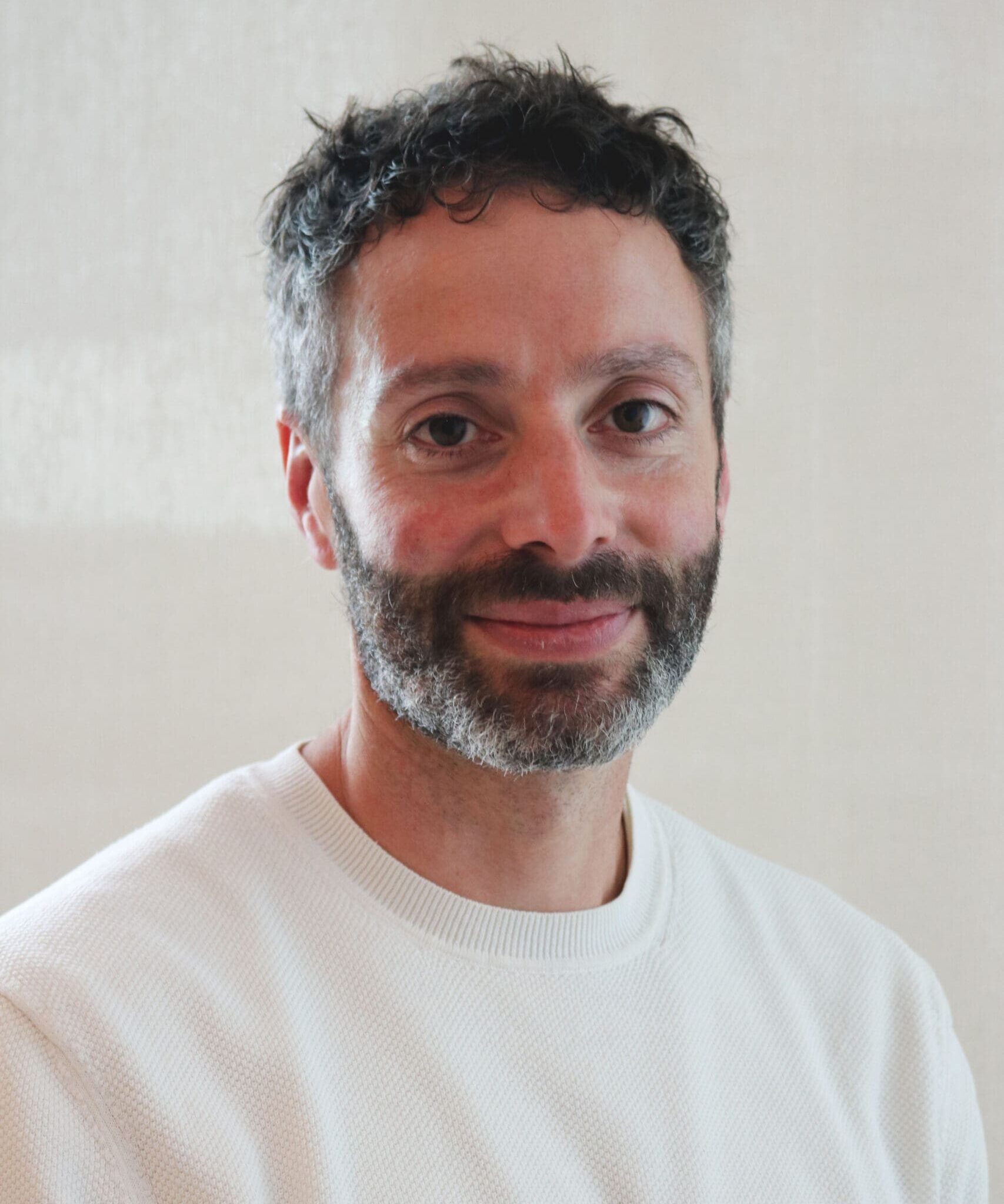
We sat down with recently joined Customer Success Executive Michael Duncan to talk about his history with the NHS before Feedback, working with customers to roll out patient pathways and building connections with clinicians.
“Having worked with the NHS for quite a long time, I’ve yet to meet anyone within it who doesn’t care about people and their patients.[…] For someone anxiously waiting for test results, speeding up that process can make a huge difference to their experience. Helping customers understand how Bleepa can support that, and how better communication between clinicians – for example, when seeking a second opinion – can improve patient outcomes, is really important.”
Michael Duncan, Customer Success Executive
Can you tell us a bit more about your background before joining Feedback Medical?
For much of my career, I’ve worked alongside healthcare. After graduating, I spent time in the pharmaceutical industry and then in smaller organisations before retraining as a personal trainer and nutritionist. I went on to work with individuals, in sport, and alongside the NHS, supporting people with long-term health conditions.
Most recently, I worked on a programme commissioned by what is now the Thames Valley ICB and Public Health to integrate physical activity into the NHS.
That involved working across primary care, secondary care and community settings, covering everything from mental health and maternity services to specialist inpatient exercise programmes, as well as cancer prehabilitation and rehabilitation in the leisure sector.
The work involved identifying where physical activity could fit, who could provide it, and supporting communication between pathway coordinators, healthcare professionals and exercise providers.
Looking back at your career, what aspects of your previous roles are you bringing to your work at Feedback Medical?
Working closely with the NHS and with care pathways are strong connections to my previous experience, but building relationships has been a huge part of every role I’ve had, and a big part of what I’m bringing to Feedback Medical. That means being consistent, following through on things and being available to support people when they need it.
That applies just as much to working one-to-one with an athlete as it does to working with a clinician or someone else in the NHS. People want to know that you understand what they need and what they’re trying to achieve.
Quite often, that also means working across different organisations and helping people with different priorities work towards the same outcome.
You’ve joined at an exciting time for the company, with new patient pathways launched with our customers – what have you been working on since joining Feedback?
It’s an exciting time to have joined. Part of my work has been about making sure that what we have in place now is scalable, so we’re ready to support more customers as we grow.
Another big part has been getting to know our current customers: understanding what they need, how they’re using Bleepa and how we can support them further.
What goes into launching a new patient pathway?
From what I’ve seen in the short time I’ve been here, it starts with conversations with clinicians and everyone who will use the product within that pathway. Whether it’s a change to an existing pathway or an entirely new one, we need to understand who’s involved, what they want to achieve, and how things currently work in practice.
There’s then the product and technical preparation. Alongside that, there’s a lot of communication to make sure everyone affected understands what’s coming, what they’ll need to do differently and how to use the technology if they haven’t used it before.
Governance is also an important part of the process, with detailed consideration of how risks associated with the change are identified and mitigated.
Next comes testing to make sure what has been created will work. After launch, there’s continued support and close attention to how things are working, as well as further communication to make sure everyone knows the change has happened and understands the new way of working.
How do you support busy NHS teams to adopt new technology?
I think there are two things. First, people need to know how to use it effectively. NHS staff are very busy, and if something feels arduous or difficult, it’s going to be hard to get them to use it. Training is an important part of making sure they feel confident using it.
The second, possibly even more important, element is understanding why it’s being introduced and the difference it can make to the patient journey.
Having worked with the NHS for quite a long time, I’ve yet to meet anyone within it who doesn’t care about people and their patients.
For someone anxiously waiting for test results, speeding up that process can make a huge difference to their experience. Helping customers understand how Bleepa can support that, and how better communication between clinicians – for example, when seeking a second opinion – can improve patient outcomes, is really important.
Any change to a way of working is difficult, but if people understand how to use the technology and why they’re using it, particularly how it can help their patients, I think that makes them more likely to embrace it and feel confident using it. I think that’s a really valuable story to tell.
During your time working across different aspects of health, what would you say are the most significant changes you’ve seen in the delivery of care?
One of the biggest changes I’ve seen recently is the shift towards more integrated care. That was a large part of my previous work.
There’s a real need and opportunity for technology to support that. Communication between hospital teams, community services, primary care and secondary care is incredibly important.
As the NHS moves further towards integrated care, including approaches such as neighbourhood health, I think technology has a huge role to play. It’s a shift I’ve worked within over roughly the past four years, and the need for better communication and information sharing between services is substantial.
What do you see as the next major development?
I think neighbourhood health could be viewed as what comes next. It’s been discussed for a long time, as initiatives in the NHS often are before they come to fruition, but it hasn’t yet taken off to the intended extent. So it will be important to keep an eye on how it develops.
Integrated care has been a big driver of neighbourhood health, with more emphasis on community services and a shift away from secondary care and hospitals. Ultimately, it’s about making services more accessible and joined up for patients, with more care delivered closer to home.
We may be at the start of seeing that physically take shape, through buildings and centres opening in communities, much like the community diagnostic centre used by one of our current customers. There are more of these expected to open around the country, which I think reflects the direction of travel.
That also creates a real need for technology that helps different teams communicate and share information, particularly when care is being delivered across different settings.
Read the previous entries in our staff expertise blog series:
- An interview with Senior Product Manager Abhinav Bandhi
- An interview with Carrie Goldsworthy, Head of Marketing
- A chat with Kirstie Wilson, Technical Writer