
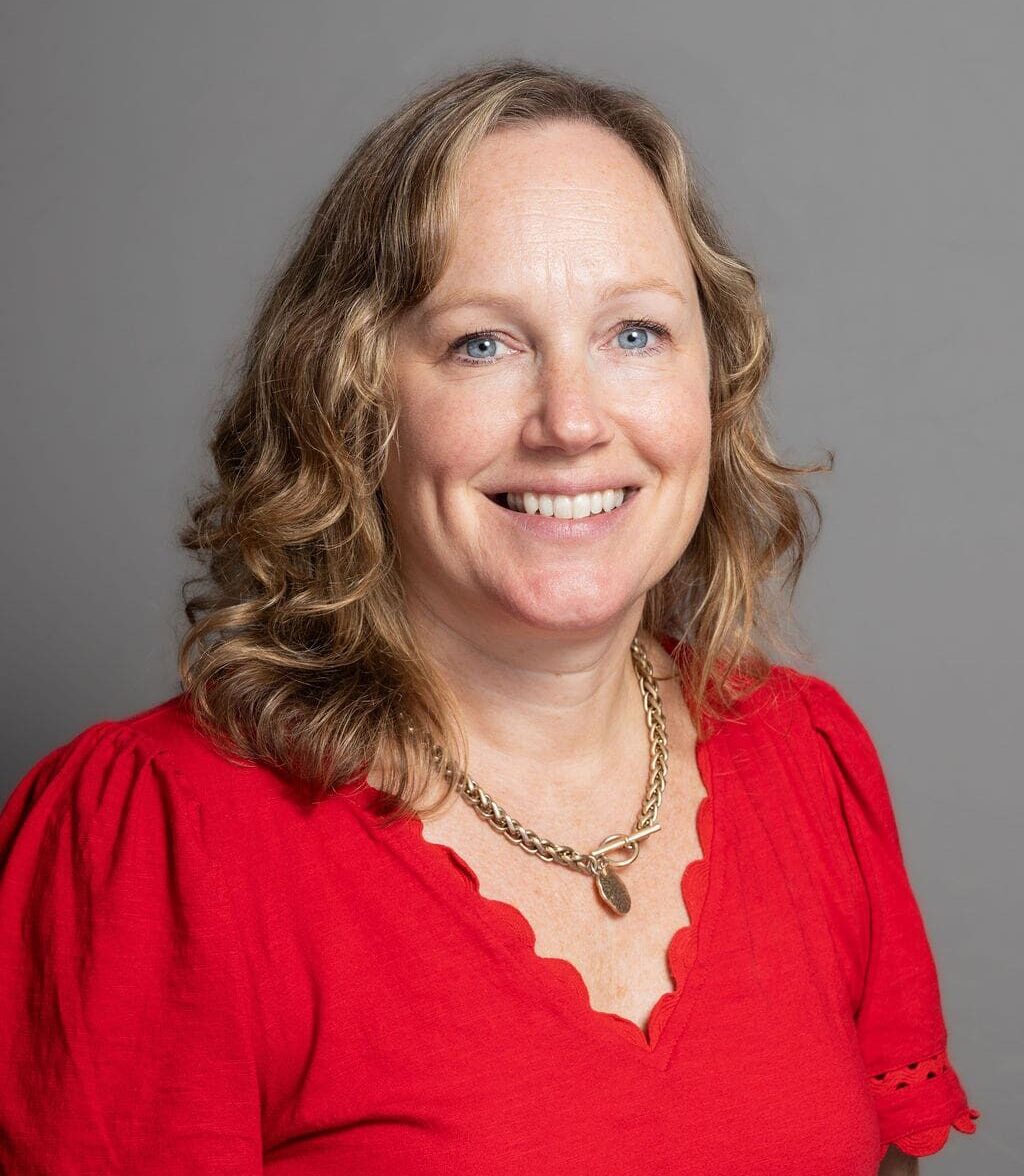
We sat down with Carrie Goldsworthy, Head of Marketing, to talk about healthcare trends and cycles, breaking through and supporting credibility in a complex market.
“Healthcare marketing is about understanding people, not just products. The sector is complex, crowded and constantly changing, so you have to keep listening, keep adapting and keep grounding your message in evidence and real experience.”
Carrie Goldsworthy, Head of Marketing
Can you tell us a bit more about your background before joining Feedback Medical?
I started out in publishing, first at The Economist as an advertising production assistant, working on the weekly newspaper. It was a great first role and a strong start for my CV, but after a period of time I wanted to move closer to editorial work, writing and editing.
I moved into book publishing as an editorial assistant, which was a very different pace. Weekly publishing had been very rapid with tight deadlines but could get a bit repetitive, and at the other end of the scale books took a long time to work on. Those first roles taught me a lot about the kind of work that suited me and finding a happy medium.
My first step into healthcare was at the Audit Commission.
I started in a publishing position, working on national reports across public services, including local government, health, housing, and police, fire and rescue. I later moved into a broader account management role supporting the Health Policy Directorate, which meant communicating our work to NHS trusts, primary care trusts and strategic health authorities (as they were called at the time).
That role gave me a strong grounding in health policy and the NHS, as well as wider communications disciplines – websites, events and direct marketing. It expanded my experience beyond publishing and helped build expertise that still stands me in good stead today.
Interestingly – when I was first in the healthcare space Andy Burnham was health secretary – that was only for a year, but it felt quite significant at the time.
And now he’s our prime minister!
Yes – it goes to show how things, and people, can come back around.
The benefit of staying in the sector over time is the opportunity to see what changes but also what hasn’t – what patterns have you seen repeated in health?
I feel like I have seen a lot of repetition, particularly around reforms. Some ideas that are being discussed now feel very familiar because similar policies were being talked about 15 or 20 years ago. When governments change, older approaches often come back again, sometimes with a new lens and sometimes with the hope that they will work better this time.
That can be frustrating, particularly in the commissioning space, where there has been a huge amount of turmoil over the years. You do sometimes think: do we really believe this reform will work when the last several did not? But that constant movement is also part of what keeps healthcare interesting. The sector never stands still, even when some of the underlying issues remain the same – and there is always the hope that this time the reforms might have a more significant impact.
What has kept you engaged with healthcare as a sector?
I fell into healthcare rather than actively pursuing it, but once I was more familiar with it, I realised how complex and interesting it was.
I spent a few years working in housing, but I knew fairly quickly that healthcare was a better fit for me. Healthcare is about people, systems, policy, pressure and change, and there is always more to understand.
Once you build expertise in such a complex area, it feels valuable to keep using it. You can never know everything, but having a level of knowledge in a niche space is rewarding. There is always something new to read, track or get your head around, and that keeps you on your toes.
From a marketing perspective, what is the biggest challenge in crafting a product narrative in healthcare?
The biggest challenge is striking the right balance between staying true to your message, your unique selling point (USP) and your value proposition, while also adapting to the environment around you.
When I first started here, Feedback Medical was an established company, but there was still a start-up feel because Bleepa was a new product. We were exploring what the messaging should be, and that work has continued to evolve. There have been changing policies, changing feedback from the sector and changing views on where we fit.
You have to keep asking: how much do we adapt to what we are hearing from the outside world, and how much do we hold firm to our original use case and USP?
My advice would be to keep digging into what stakeholders are looking for, how your product fits into the market and what your value proposition really is. If the market keeps changing, you have to keep reassessing that work.
We’ve talked about repeated patterns – on the other side of that – what are the biggest changes you have seen in healthcare technology, and how have they affected how products like ours are positioned?
There have been major policy changes, funding constraints, COVID and the wider acceleration of technology. In many ways, technology moves faster than the NHS can possibly keep up with. We can use our phones for so many things – managing our money, life admin, communication, watching and scrolling endless content. And manage our health in so many ways but not enough yet in terms of our interactions with public healthcare services.
Another major change is the competitive landscape.
Healthcare technology evolves quickly, and companies come and go. When Bleepa was first on NHS England’s clinical communications framework, it was alongside a number of companies that no longer exist.
I think a significant part of how we’ve stayed the course is because of how we’ve pivoted and evolved.
Feedback Medical has built on its medical imaging expertise and evolved into pathway redesign, connecting up parts of the system and helping them work more effectively, reflecting an increasingly connected world and the challenges of the health system. That ability to adapt to the market has been important.
What advice would you give to someone trying to build meaningful stories in healthcare marketing?
Use every opportunity to build relationships, both internally and externally. It is easy to get caught up in the day-to-day, ticking things off the to-do list, but the most valuable insight often comes from conversations.
You need to understand the market, people’s pressure points and how they work within the NHS. I have never worked on the NHS frontline, so there are things I know I will not fully understand unless I get out, meet people and listen to their stories and concerns. That intelligence is invaluable when you are trying to craft product stories that communicate effectively.
It is also important to remember the difference between the language used at the centre of healthcare and the language used locally or on the frontline.
Policy speak, marketing speak and buzzwords do not always reflect how people actually talk about their challenges. If you want to be heard, you have to understand where people are coming from and what matters to them.
How do companies differentiate themselves when so many are saying similar things?
I think it’s about finding a way to break through. A lot of companies are saying similar things; so evidence, credibility and human stories matter. Real case studies, testimonials and quotes from actual people are increasingly important, because otherwise, however interesting or impressive your solution is, it’s only your word people have to work from. You need others to validate that.
That means getting useful intelligence back into the organisation from people who understand the environment you are trying to communicate with. Even small details matter. For example, NHS staff often value practical things like pens, notebooks and post-it notes because those basics are not always provided. You only learn that by getting out and talking to people.
How is AI changing marketing, particularly in healthcare?
AI is changing healthcare, but it is also changing marketing itself. Marketing has shifted dramatically over the years. When I first started, it was not as data-driven as it is now. There are now many more digital tools available to understand audiences, performance and return on investment, but that also means the role has become more complex.
In business-to-business marketing, and especially healthcare technology, it can be difficult to get the right information back because it is not a direct consumer relationship. AI adds another layer of complexity. It is no longer just about whether people visit your website; it is about understanding how you are reaching the right people when the routes to information are changing.
At the same time, as AI-generated content becomes more common, authentic human voices become more important. People do not want a homogenised experience that sounds the same as everyone else. That is why team expertise, case studies, testimonials and named human perspectives are so valuable.
What responsibility do marketers have in healthcare?
Marketers have an ethical responsibility, especially in healthcare. You cannot sell untruths or mislead people. In healthcare, someone’s health may be at risk, so you have to be careful, evidence-based and honest.
Healthcare organisations have seen a lot of people make claims that are not necessarily true, which makes them more cautious and more demanding of evidence. They want to know where something has been done before and whether it works. That can be frustrating, particularly for start-ups, but it also reinforces the importance of partnering with the right people, finding clinical champions and building credibility through evidence.
Healthcare marketing is about understanding people, not just products. The sector is complex, crowded and constantly changing, so you have to keep listening, keep adapting and keep grounding your message in evidence and real experience. The organisations that do that well are the ones most likely to build trust.
Read the previous entries in our staff expertise blog series:
- A chat with Kirstie Wilson, Technical Writer
- A conversation with Chief Financial Officer Emma Oswick
- A conversation with Kell Webber, Information Security Manager