

The NHS doesn’t have an appointments problem, it has a decision-making problem
Outpatient services have been the backbone of elective care for decades. Yet despite sustained efforts to increase capacity, reduce waiting lists and improve productivity, NHS organisations continue to face growing demand and ongoing challenges in meeting referral-to-treatment (RTT) targets.
The reason may be simpler than many transformation programmes acknowledge: the traditional outpatient model was never designed for modern healthcare.
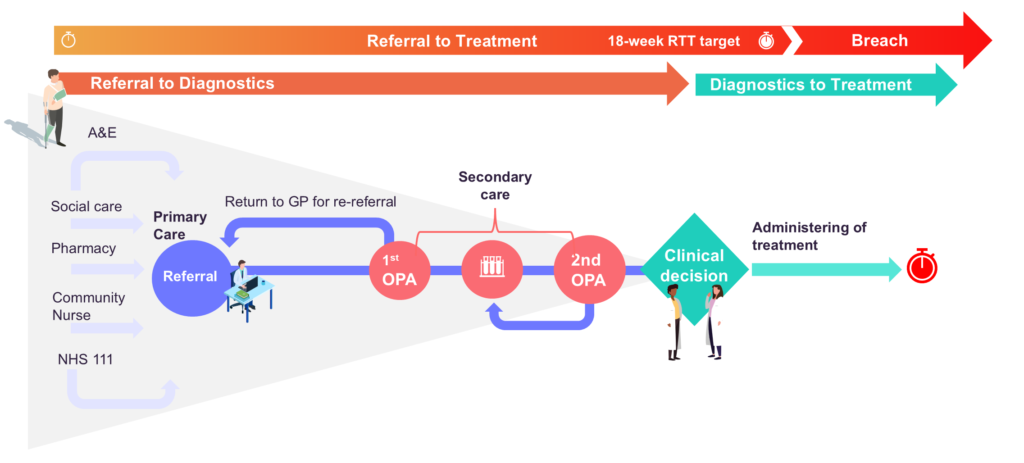
The system we use today evolved over more than a century. It was built around a world of paper records, physical imaging films and limited communication channels, where specialists, patients and clinical information all needed to be in the same place at the same time. While technology and clinical practice have changed dramatically, many pathways still follow the same sequence of referral, appointment, investigation and follow-up that was established decades ago.
As a result, patients often spend months navigating a series of appointments before reaching the point they value most – a clinical decision.
“The answer is not more outpatient appointments. Working inefficiently, but faster, is the equivalent of running to stand still and is insufficient to meet the demands of modern healthcare.”
The real opportunity lies earlier in the pathway
Much of the national conversation around elective recovery focuses on treatment capacity. Additional clinics, surgical hubs and workforce initiatives have all sought to help reduce waiting times.
However, the data suggests the greatest opportunity may lie elsewhere.
According to the evidence highlighted in Feedback Medical’s Pathway Redesign Playbook, only around one-quarter of patients on the NHS elective waiting list have reached the stage where a decision has been made to admit them for treatment. Approximately three-quarters remain in earlier stages of the pathway, including outpatient assessment, diagnostics and clinical decision-making.
This means that for most patients, the biggest delays occur before treatment is ever considered. In fact, the Public Accounts Committee has reported that around 80% of elective pathways conclude through outpatient care, meaning most patients can ultimately be managed without requiring an intervention.
If most patients never require treatment, then accelerating diagnosis and decision-making represents one of the largest untapped opportunities to improve patient flow, reduce waiting times and release clinical capacity.
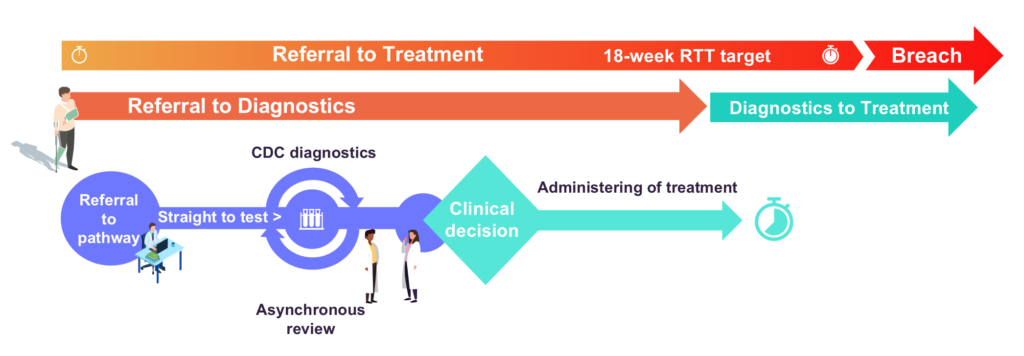
“In the current model outpatient appointments are used to gate access to tests, whereas tests should gate access to appointments.”
An outdated model creates bottlenecks
Many traditional pathways still rely on outpatient appointments as the gateway to diagnostic tests.
Patients are referred, wait for an initial consultation, attend the appointment, undergo investigations and then wait again for a review before a clinical decision can be reached.
Yet in many cases, clinicians already know which tests are likely to be required at the point of referral.
This creates a significant bottleneck. Diagnostic demand continues to exceed capacity, with 1.92 million patients waiting for tests in March 2026 and more than one in five waiting over six weeks. Delaying access to diagnostics through unnecessary outpatient steps only adds further friction to an already pressured system.
The consequence is longer pathways, increased uncertainty for patients and growing pressure on clinical teams.
Moving from appointments to decisions
At Feedback Medical, we believe outpatient transformation should start with a different question. Rather than asking, “Which clinic should this patient attend?”, organisations should ask, “What is the earliest point at which a safe clinical decision can be made?”
This shift in thinking fundamentally changes pathway design. A decision-led pathway focuses on identifying the information required to reach a diagnosis, determining how that information can be collected as early as possible and ensuring specialist expertise is applied only where it adds value.
In practice, that may mean:
- Delivering diagnostics earlier in the pathway
- Using digital questionnaires and structured information gathering
- Enabling remote clinical review and collaboration
- Removing appointments whose sole purpose is to request tests or discuss results
- Directing patients to the right service only once sufficient information is available to make an informed decision
The objective is not to reduce clinical oversight, but to ensure that clinical expertise is applied at the point where it has the greatest impact.
Faster decisions, better outcomes
Reducing the time from referral to diagnosis creates benefits across the healthcare system. Patients receive answers sooner and spend less time living with uncertainty, clinicians gain earlier visibility of those who require treatment and providers create additional headroom within RTT pathways by reaching definitive decisions more quickly.
Importantly, this approach is about removing wasted time, not increasing activity.
By redesigning pathways around faster decisions rather than more appointments, organisations can improve productivity using existing resources while delivering a better experience for patients.
A call for a different approach
The future of outpatient transformation will not be defined by how many appointments are delivered but by how quickly patients reach the right clinical decision.
Feedback Medical’s pathway redesign methodology is built on four principles: designing for faster decisions, delivering diagnostics earlier, removing unnecessary touchpoints and digitally enabling the entire pathway. Together, these principles offer a practical framework for tackling one of the NHS’s biggest challenges: helping patients move from referral to diagnosis faster.
The fastest pathway is not the pathway with the most appointments, it is the pathway that reaches a safe diagnosis and clinical decision in the shortest possible time.
Read the Pathway Redesign Playbook here