
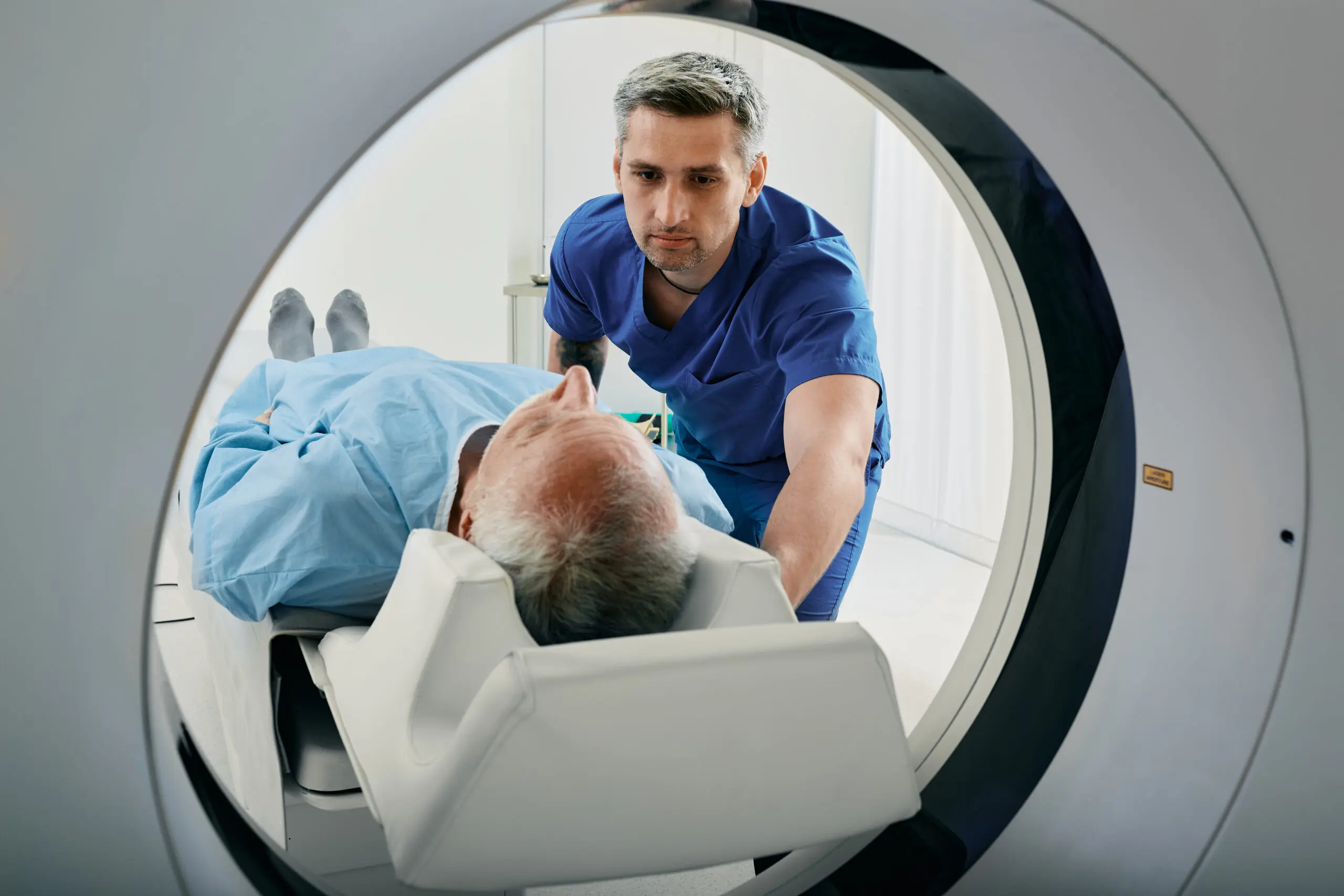
The NHS has announced a further £237 million investment in community diagnostic centres, which will see four new sites open, 17 expand, and 15 receive enhancements to boost diagnostic capacity.
This is a welcome announcement, and community diagnostics continue to play an important role in underpinning the development of a more effective NHS. However, it is more of a pivot in the right direction than a decisive step towards resolving the challenges facing elective care.
At Feedback Medical, we are long-standing, vocal champions of the community diagnostic centre programme as a means to deliver diagnostic capacity closer to home. Since then, we have developed a blueprint for how pathways can be implemented to use this extra capacity while streamlining the entire patient journey.
Why diagnostics alone are not enough
Reducing the elective waiting list rests on two essential foundations: diagnostics available locally to residents, and the right digital infrastructure to support remote, asynchronous clinical review. When these come together, care can be delivered more effectively and closer to home, while ensuring high standards of care are available to every patient.
Increasing diagnostic capacity, while important, addresses only one part of the wider elective care challenge. Without parallel changes to outpatient models, data sharing and pathway design, the NHS risks creating more diagnostics without resolving the delays that prevent patients from moving efficiently through the rest of the pathway.
This is particularly important in a system where the greatest friction is often not in conducting the test itself, but in what happens before and after it: initial outpatient appointments which may not be necessary, ordering the right diagnostics in the first place, access to specialist advice, multi-disciplinary review, and the timely communication of results and next steps.
Designing digital pathways
This has already been demonstrated in practice, with the solution praised by the All-Party Parliamentary Group on Diagnostics. In Bleepa-enabled pathways at Queen Victoria Hospital NHS Foundation Trust, patients with breathlessness saw a 90% reduction in the number of in-person outpatient appointments, while referral-to-treatment time was cut to 63% of the national standard.
What made this possible was not diagnostics alone, but the redesign of the pathway around earlier testing, virtual collaboration and quicker decision-making. Community diagnostic centres can increase local capacity, but digital pathways are what allow systems to convert that capacity into faster, better coordinated care.
The case for digital investment now
The most significant delays in the patient journey, which cannot be solved simply through additional community diagnostic centre capacity, are delays to the initial outpatient appointment, limited data sharing across NHS sites, and inefficient multi-disciplinary team meetings, which can leave patients waiting for the next available slot before care can progress. The answer lies in wider digital transformation to make better use of the diagnostic capacity that now exists through the community diagnostic centre programme.
Digital infrastructure must be invested in alongside estates if the full benefits are to be realised, or we will simply see an expansion of the existing analogue working model with more testing. So far, this investment has not materialised at the scale required, and the consequences are clear. Waiting lists remain persistent, with much of the progress to date attributed to lower referrals and waiting-list rationalisation rather than a sustained increase in output.
To turn welcome capital investment into lasting change for patients, the NHS must prioritise deploying proven digital pathways, utilising platforms such as Bleepa, that unlock the full value of community diagnostic centres and bring about real improvements to the patient journey.