
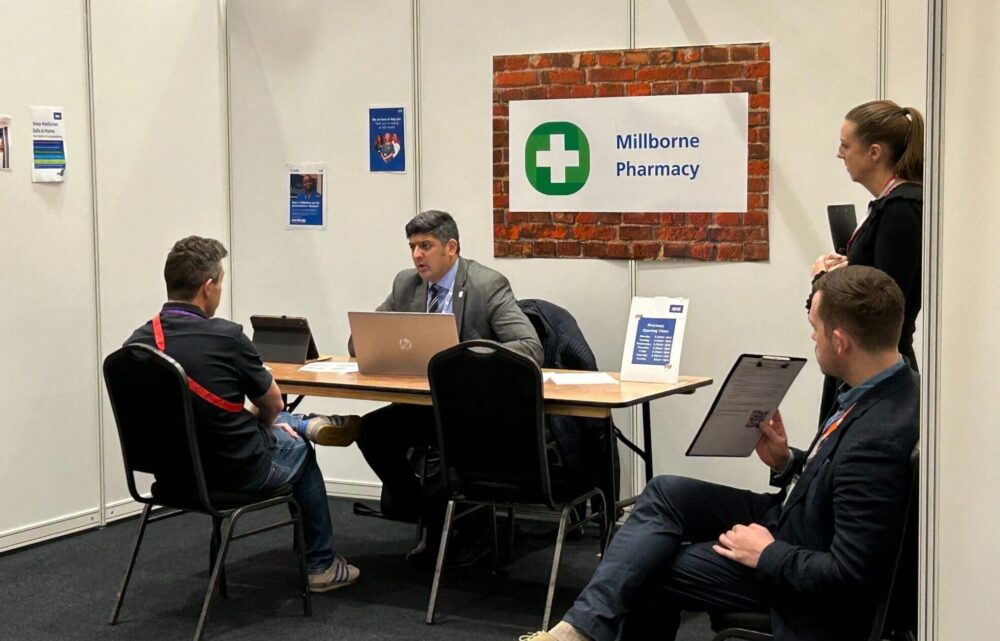
The recent Driving Action in Neighbourhood Health webinar brought together leaders from across health, care and the voluntary sector to reflect on the national neighbourhood health service simulation, which took place at the NHS Providers conference in November 2025. The webinar shared how neighbourhood-level working has the potential to significantly transform outcomes for residents and improve the experience of frontline teams.
NHS Providers’ Louise Barnett chaired a panel of Feedback Medical CEO Dr Tom Oakley, Optum UK Chief Development Officer Dr Indra Joshi and PPL Joint Chief Executive Claire Kennedy.
Across the webinar, one message was clear: digital transformation is not simply modernising existing processes but about unlocking a fundamentally different way of delivering care, empowering neighbourhood teams to work as one around the residents they support.
Behaviour, not structures, drives early impact
Claire Kennedy began the discussion sharing how In the first cycle of the simulation participants defaulted to familiar behaviours: refining referrals, improving handovers and attempting to optimise existing pathways. The results were modest.
The second cycle told a different story. When teams consciously shifted their behaviour – acting as a single neighbourhood team rather than representatives of individual organisations – performance and experience improved markedly.
“In the second cycle, they have the ability and confidence to try out different ways of working – and that’s where we start to see the real differences,” Claire Kennedy observed.
Digital enablement beats physical co‑location
The panel highlighted the value of digital-first thinking in building the new approach – while systems often assume physical co‑location is essential, the simulation showed the opposite.
Participants ranked digital connection as far more important for effective neighbourhood working, valuing the speed, flexibility and accessibility of virtual collaboration – even when colleagues were only metres apart.
One of the most tangible outputs demonstrated by the simulation was a significant reduction in referrals, driven by teams operating as one. As Dr Oakley put it: “if you can align care delivery around the patient […] that would be the cornerstone to unlocking a new approach.”
When professionals are already part of the same conversation, referrals became extensions of collaborative decision‑making. For residents, this translated into a clearer, more coherent experience.
“From the patient resident [perspective] their experience is of receiving care from a single team of people, as opposed to being passed between organisations,” Kennedy noted.
Population health and individual care must work together
The panel addressed the importance of understanding neighbourhoods as whole systems –recognising assets, unmet needs, and the everyday touchpoints that shape residents’ health and wellbeing.
Population-level insight must be linked with clear ownership of action, however, with clarity about who acts, when and how.
As Dr Joshi explained: “It’s great to identify a cohort, but it’s the action on that identification that really shifts the needle.”
Lessons to take forward
Looking ahead to what this means for implementing these learnings – the panel suggested scaling neighbourhood health means integrated care boards and partners acting as conveners: aligning ambition, prioritising outcomes, and supporting cross‑sector collaboration.
It also means challenging the narrative around the risks of data sharing. “We’re very good at assessing the risks of sharing data, but we rarely consider the risks of not sharing it,” said Dr Tom Oakley.
Where We Should Start – key takeaways from the panel
- Understand your neighbourhoods – not just population data, but assets, relationships and lived experience
- Agree a shared ambition across partners before investing in tools or structures
- Enable digital collaboration early, even where full record integration is not yet in place
- Focus on behaviour and trust, not just governance and architecture
Find out more about neighbourhood health: